Radon Testing
Description
Radon testing is a vital part of ensuring your home’s safety and air quality. Radon is a naturally occurring radioactive gas that forms underground and can seep into homes through cracks in foundations, floors, and walls. Because it’s colorless and odorless, the only way to know if your home has elevated levels is through proper testing.
What’s Involved
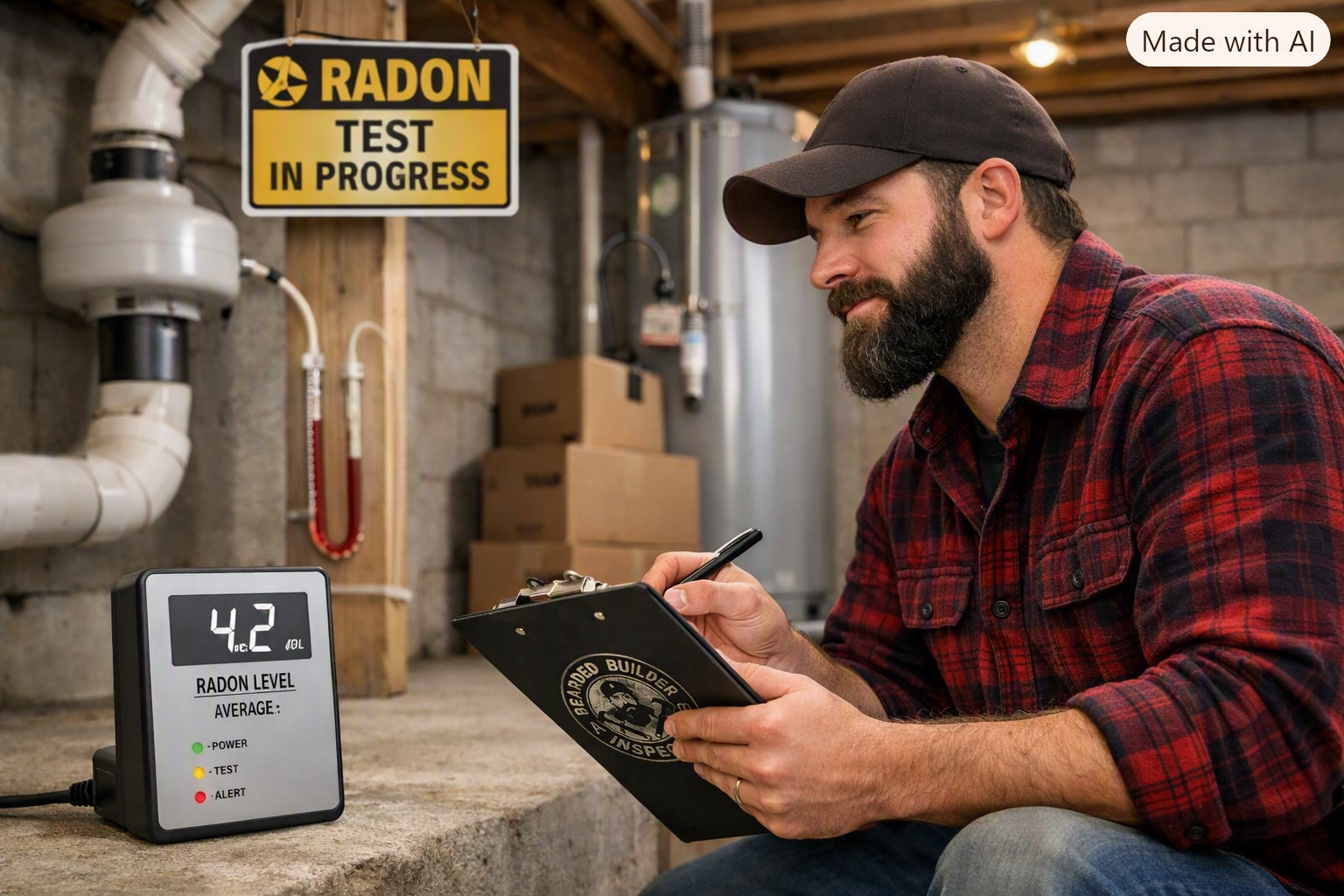
Setup of testing equipment — A small, calibrated device is placed in the lowest livable area of your home (often the basement) to measure radon levels over a set period, typically 48–72 hours.
Monitoring and data collection — The device continuously samples air to detect radon concentration, expressed in picocuries per liter (pCi/L).
Analysis and reporting — After testing, results are reviewed and compiled into a detailed report showing average and peak readings, along with recommendations if levels exceed EPA guidelines.
Why It’s Important
Long-term exposure to high radon levels can increase the risk of lung cancer. The EPA recommends mitigation for homes with readings above 4.0 pCi/L. Testing gives homeowners peace of mind and helps identify whether a radon mitigation system is needed to reduce levels safely.
What You’ll Receive
After your test, you’ll get a digital report outlining your home’s radon levels, testing conditions, and next steps if mitigation is recommended.
Pricing
Radon Testing: $150
48- hour testing certified results.